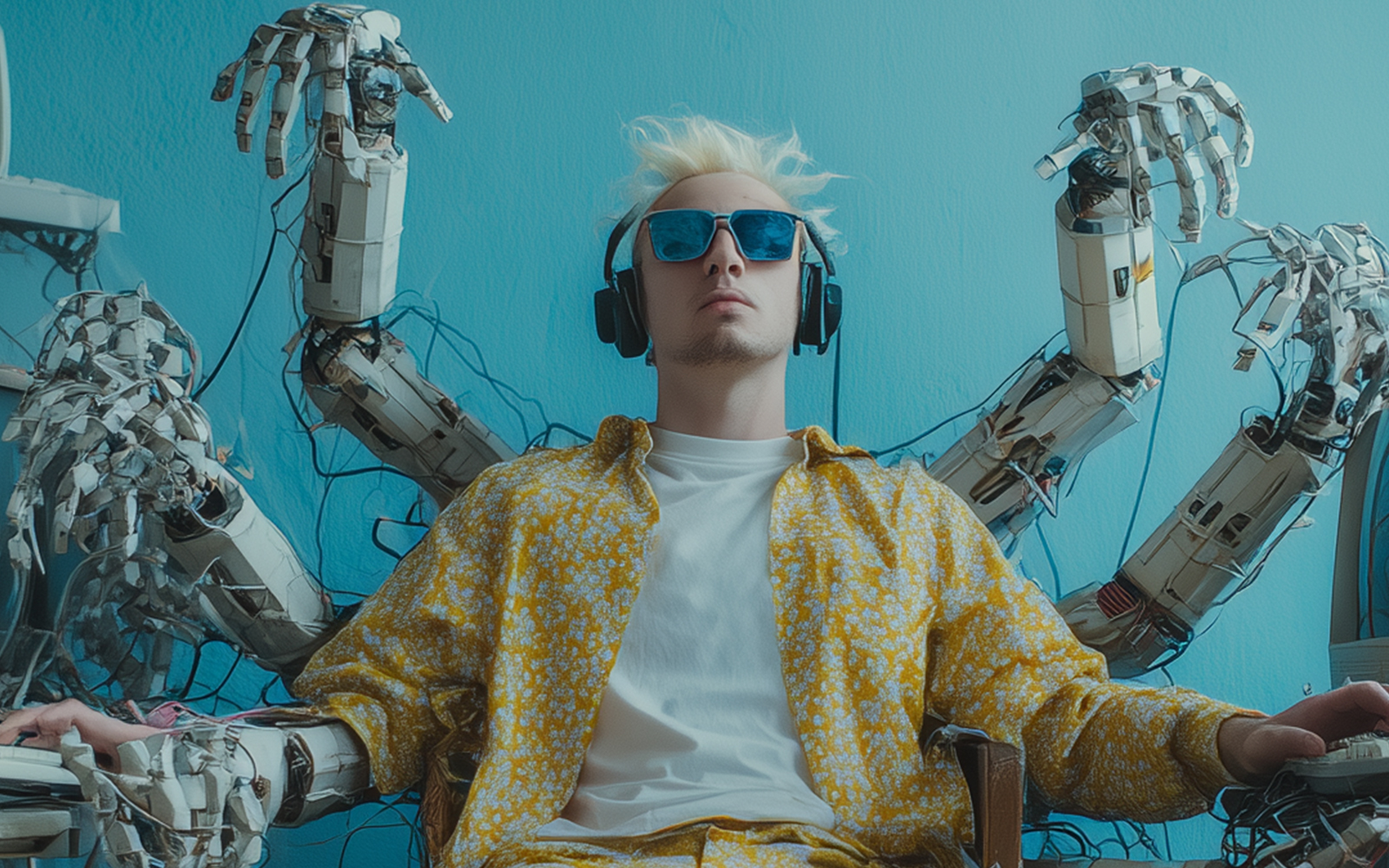

AI is reshaping the definition of a creative agency. According to Experian, 93% of agencies are using AI for creative planning, and more than 8 out of 10 will have AI control the majority of planning decisions in the near future.
This trend will only increase in 2026 as AI apprehension fades and adoption becomes the norm. But that doesn't mean AI is making creative agencies obsolete. While we hear of firms like Goldman Sachs announcing cuts and blaming AI, much of this is actually due to the business cycle rather than technological changes. AI isn't eliminating the need for people. It's getting rid of the dull tasks that keeps people from doing their best and most inspired work.
Here's what creative agencies need to do to use AI in the right way to set themselves up for success in 2026 and beyond:
With AI automating many of the more manageable tasks, traditional junior and mid-level roles can be reimagined. Agencies will be more focused on cultivating strategic thinkers.
Netflix’s content teams use AI to analyze scripts, optimize trailers, and even recommend shooting locations. Now, senior teams can focus on creative and strategic thinking rather than laborious minutiae.
While there will be an emphasis on experienced roles, that doesn’t mean entry-level staff isn’t necessary. They’ll be essential for new ideas and thinking outside the box The focus on strategic thinking should be a breath of fresh air to traditional junior roles.
Creativity can get a boost, thanks to AI.
The creative team of the near future needs unique concepts and the ability to execute them with the support of AI. Staffing copywriters who can code or a strategist who can build programs with JavaScript will position creative agencies for the future. This broadens the range of people who can enter the creative career, bringing new ideas and different perspectives.
There will also be new roles that will emerge. For example, AI filmmakers, including those experienced with prompts and generative tools, can help build video campaigns. Technical fluency will become essential as creative chops. In a few years, agencies and production companies could merge as their roles meld.
The agencies that want to thrive need to ask new employees, "Can you think in new ways, adapt to changing methods, and build AI-powered systems that work more efficiently?"
Every agency professional knows the job involves inspiring creative and strategic work – and the endless administrative tasks that no one wants to do. While meeting notes, timesheets, and expense tracking are crucial, they aren’t why creatives got into the career.
In 2026, AI automation tools will handle most of these paper-pushing processes. AI agents are already booking meetings, summarizing calls, and updating project trackers without people having to click a mouse. AI will finally strip away the drudgery of this business, and creative agencies shouldn’t need to spend time on those tasks. People can return to why they got into advertising in the first place and focus on what their clients really want: original ideas and powerful storytelling.
Until now, advertising has been constrained by budgets, logistics, and time. But generative AI tools are rapidly dismantling those barriers.
AI is changing the dollar math equation. Recently, Starbucks released a fully-produced, live-action ad that reached 79 million views. AI video editing software inVideo recreated the video with astounding detail – allegedly for just $150. But it still needed a human creative team to come up with the concept, decide the angles and create the original video as inspiration.
This is good news for agencies. The hard costs of production will decrease thanks to AI-assisted production. Then, agencies should use the cost savings to focus more resources on delivering higher-quality work, including hiring more talent and investing in the latest technologies.
2026 won’t be the year AI made creative agencies obsolete. It will be the year it will force them to evolve by stripping away inefficiencies, finding new creatives with different backgrounds and experiences, and forcing agencies to rethink how they deliver value. Agencies that stop fearing disruption and embrace AI as a boost to creativity will be well-positioned to succeed in the future, and potentially go beyond what they even dreamed of.
But one thing will remain the same: Broadly defined creative thinkers—whether it is in media, creative, strategy or production—will always be in high demand.
Scott leads Copacino Fujikado Advertising with a focus on growth, creativity, and a people-first culture. With 30+ years of experience, including as CEO of Publicis Seattle, he has helped shape iconic campaigns like T-Mobile’s “Un-carrier” and driven Copacino Fujikado’s evolution as a national player. He champions breakthrough work for brands in every category by building trust and empowering teams.